Lynne Ramsay
enjoys a life-changing moment in her film career
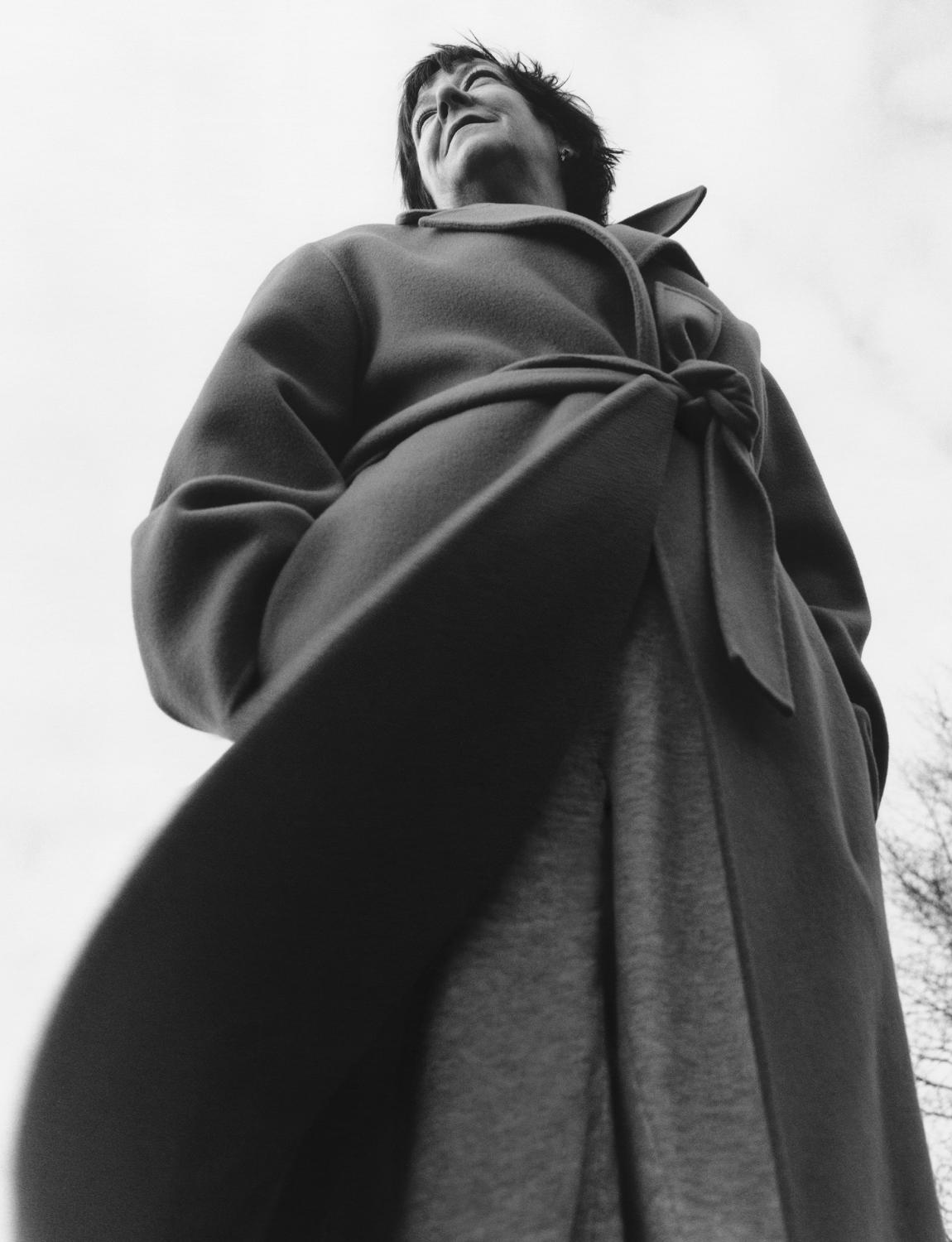
Lynne Ramsay is not the kind of director to shill for a franchise and then watch the residuals roll in. Her intensely watchable studies of damaged people are big beasts revered by her peers and the actors she works with time and again. Jennifer Lawrence petitioned her to make Die My Love at Martin Scorsese’s suggestion, sowing the seed for a $24 million bidding war, a six-minute Cannes ovation and Lynne’s signing on with Hollywood’s biggest agency. Even with five starry projects in the works, the Glaswegian blue-collar intellectual, 56, swears she is still indie at heart.
Underneath the awning outside Golborne Deli in west London on a mild winter afternoon, the director Lynne Ramsay is rummaging in her slouchy silver handbag in search of a cigarette lighter when, unexpectedly, a beautiful crystal surfaces instead. Pale and vaguely lighter-shaped, it is a memento from a recent trip to California that also saw Lynne, 56, taking a promising first foray into surfing under the tutelage of Bong Joon Ho’s producer. “It’s for clarity and communication,” Lynne says of the crystal, placing it in the middle of our table before continuing her search. “How LA is that?”
Lynne is dressed in a grey-and-blue jumper and jeans with a too-long grey Prada coat, still on loan by the grace of Miuccia Prada’s press office, on top. “I trip over going up the stairs – I’m only five foot two,” she says, laughing. She likes a fedora, but today it’s a red beanie. “I’ve always been a hat fan.” The words tumble out of her at a clip, in a musical Glaswegian accent that prompted Joaquin Phoenix to say of their initial phone conversations, “I said ‘yeah’ a lot but then spent most of the time trying to figure out what she was saying.” Based on today’s meeting, “brilliant” and “fuckin’” are her most called-upon intensifiers. She is in London for a BFI screening of her latest film, Die My Love, in which Jennifer Lawrence and Robert Pattinson play a couple unravelling in rural Montana. Jonathan Glazer, the Oscar-winning director of The Zone of Interest, is moderating the discussion with her – something she says he “doesn’t do” as a rule.
She is clearly a director’s director. Martin Scorsese, the catalyst behind Die My Love, calls her “the most extraordinary filmmaker. One of the greatest alive.” Ariana Harwicz’s novel had been one of his book club books, and he sent a copy to Lawrence, who petitioned Lynne to direct. Lynne is still incredulous. “When he introduced me at a screening in New York as one of the greatest, I was like, I’ll eat my hat,” she says. “That was a moment.”
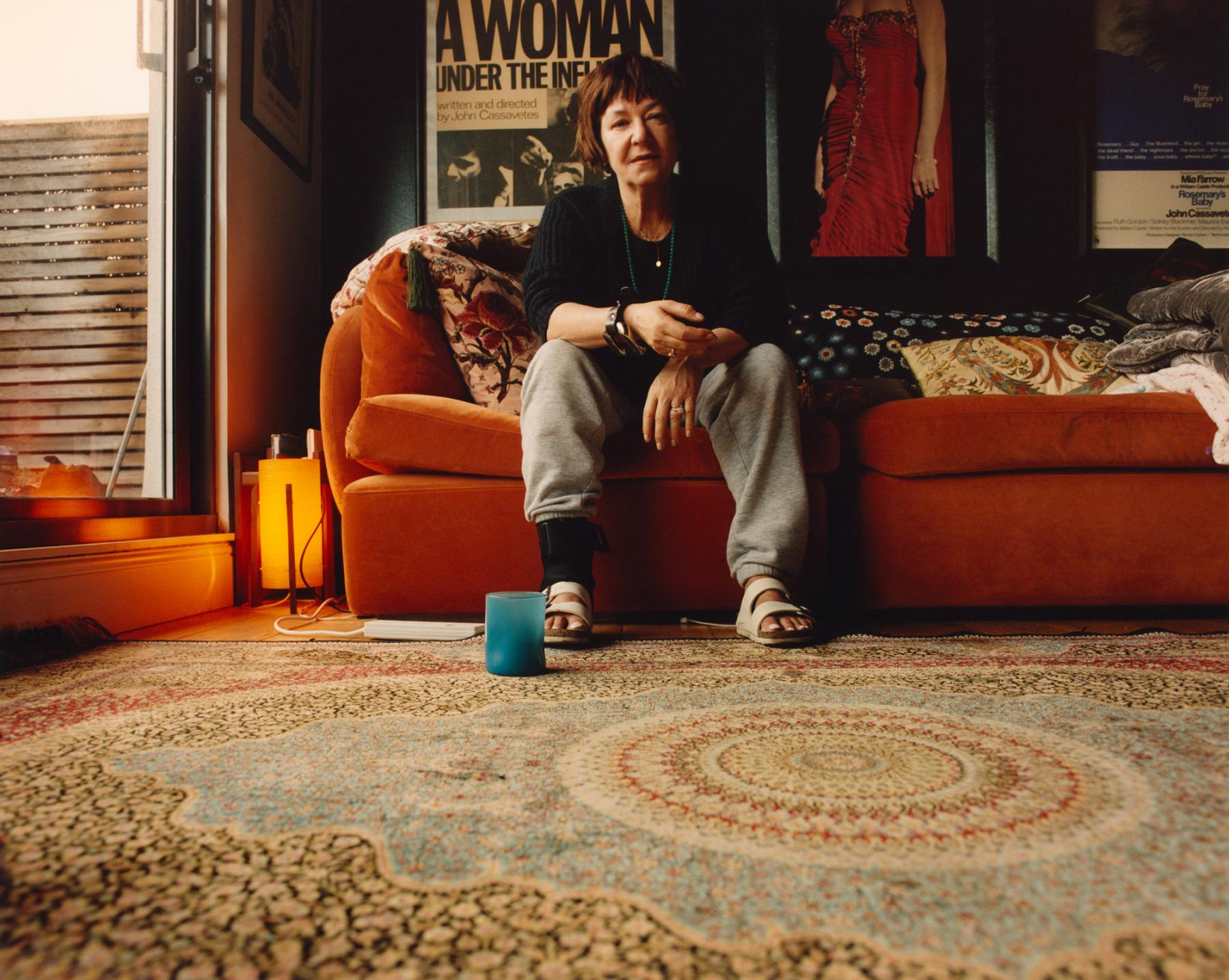
Lynne aims to fit in two 20-minute sessions of meditation per day, “At least one, or I go bonkers.”
In keeping with its title, Lynne’s Die My Love announces itself with ferocity. It grossed $2.8 million across nearly 2,000 cinemas during its opening weekend in North America. The film has been nominated for outstanding British film at the 2026 Bafta Awards. Lawrence earned a Golden Globe nomination for best actress, with Time magazine hailing hers as “the kind of performance you go to the movies for, one that connects so sympathetically with the bare idea of human suffering that it scares you a little.” Opposite her, Pattinson (whose mouth in the film, Lynne and I agree, resembles “a wound”) delivers a quietly devastating turn as Jackson, the well-meaning but somewhat inadequate husband watching his wife disintegrate.
But it is Lynne’s sonic landscape that elevates Die My Love from harrowing character study to full-on sensory assault. At one point during production, Lynne phoned in a version of Joy Division’s “Love Will Tear Us Apart” as a mood reference. “I can’t sing,” she claims – incorrectly, as it turns out. The production team added a sparse backing track to her dusky vocal, and it now accompanies the film’s end credits. Lynne and her music producer Raife Burchell, a one-time actor in her films, co-wrote songs with George Vjestica from Nick Cave’s Bad Seeds, including the spiky punk track that opens Die My Love (“Some people thought it was Amyl and the Sniffers, and I was really pleased with that”). She likes the immediacy of songwriting as an antidote to the slow apparatus of film production. “You can make it on the spot, whereas a film is a big beast.”
Die My Love is only Lynne’s fifth feature-length film in a career that started in 1996 with the award-winning short Small Deaths, her graduation project. It is her first full-length work since 2017’s acclaimed You Were Never Really Here, the mysterious, elegiac thriller that stars Joaquin Phoenix as a suicidal mercenary called Joe bent on rescuing a sex-trafficked girl from an Epstein-like ring of powerful predators while caring for his declining mother. Although quite disparate at the IMDB level, at their core all her films are immensely watchable, gripping studies of damaged people; distinct, original works that have an intimate focus and paint a mood with images, some of which recur throughout her oeuvre – the use of curtains as shrouds, the music that conveys inner states. Her work remains in your mind.
“I want to do a new cut of Die My Love. I know there’s material that we didn’t really explore.”
But what does Lynne Ramsay think characterises a Lynne Ramsay film? “I know my shots, and I know what I want,” she replies. “I don’t tend to overcover,” she adds, referring to the practice of taking multiple shot options – wide, medium, close-up – into the edit suite. A good job, she notes, since she’s usually operating on a shoestring. “I’m still an indie filmmaker.” She thinks photographically, spatially. “I look at you and go, ‘Right, what’s the back of your head? That’s going to be the shot. Your ear, it’ll be here, your glasses, it will be from the side, then we’ll go underneath your feet.’” She obsesses over the details that convey emotion. In her first feature, 1999’s Bafta-winning Ratcatcher, for example, we see the central character, 12-year-old James, played by William Eadie, tending to his sleeping mother’s feet, adjusting her stocking to stop her toe from poking through a hole. It’s a child’s expression of love, and a play for dignity in abject circumstances. “To me, that’s a sophisticated way of showing how he feels about everything,” Lynne says. Ratcatcher starred the Scottish actor Tommy Flanagan as James’s complex, contradictory father, George. Flanagan, who is famed for his role in the outlaw motorcycle drama Sons of Anarchy (2008–2014), and Lynne, both native Glaswegians, go way back; they have known each other since Lynne was 15. His “Glasgow smile”, the legacy of a real-life knife attack outside a nightclub, is one of the striking visual details that make Ratcatcher so evocative of life in Scotland’s largest city during the bin strikes of 1973. (It was Flanagan’s wife who gave Lynne the crystal that she pulled from her bag in the first moments of our conversation.)
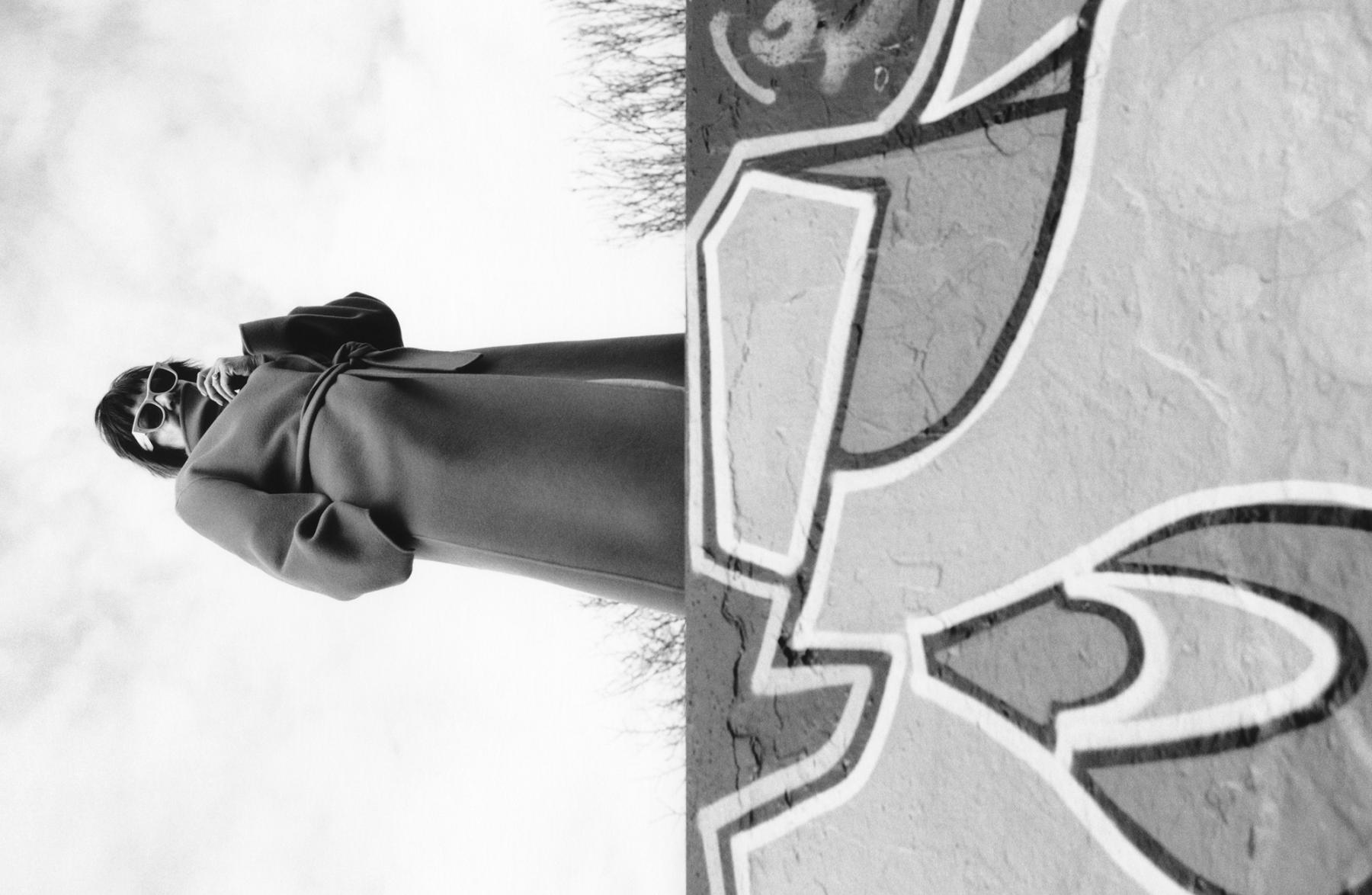
Lynne was photographed in Kelingrove Park and at home, wearing her own clothes throughout.
Lynne’s enduring amity with Flanagan is characteristic. “I’ve stayed friends with all of the actors that I’ve worked with,” she says. Joaquin Phoenix credits her with creating space for his most dangerous work to date in You Were Never Really Here. Tilda Swinton, the star of 2011’s We Need to Talk About Kevin, Lynne’s adaptation of Lionel Shriver’s megaseller about parental ambivalence and its murderous aftermath, is a godparent to Lynne’s 11-year-old (“going on 17”) daughter, Georgie. Swinton shares the responsibility with her co-star on that film, John C Reilly, who during production bought Lynne a vintage Gibson guitar after witnessing her “window-lickin’” desire outside Matt Umanov’s emporium in Greenwich Village.
Actors are constantly surprising Lynne, who seems to nurture spontaneity in them despite (or perhaps because of) the meticulous nature of her shoots. Phoenix, she says, made “the hairs on the back of my neck stand up.” A scene in which his character punches a drug dealer for poor timekeeping was a surprise even to Lynne. “He would try things. He would do something in a really funny way, then he’d do it in a really menacing way. We weren’t doing loads of shots, we were doing totally different performances.”
In Die My Love, Sissy Spacek’s tender turn as Lawrence’s mother-in-law, Pam, was preceded by a crisis of confidence in the actor. “I’m sitting holding hands in a little room in Calgary with the woman who’s been in Badlands, who was Carrie, and she’s telling me she doesn’t think she can act any more, and both of us are crying. It was one of those pinch-me moments where you’re like, Is this for real?”
For someone so talkative (our interview lasts three and a half hours; maybe it’s the crystal), Lynne’s screenplays are relatively light on dialogue, and she swerves clunky exposition. The verbal economy makes ostensibly incidental lines stand out – for example, the moment Kevin’s father, played by Reilly, admiringly compares his suddenly industrious son to Donald Trump. In 2002’s Morvern Callar, Lynne’s adaptation of Alan Warner’s Scottish novel about a supermarket worker who steals her dead boyfriend’s manuscript, a drinker in the pub asks about Morvern’s absent boyfriend, “Where’s Dostoevsky?” (In fact, he’s lying under the Christmas tree, having killed himself and left his novel in her care.) It’s a genius line because it speaks to a casual working-class intellectualism – you have to know who Dostoevsky is to make such a joke. “There’s a completely blue-collar intelligentsia in Scotland, especially in Glasgow,” Lynne says. “It’s also taking the piss out of being an intellectual.”
Lynne grew up in a “big noisy Glasgow family”, the kind where you had to zone out to hear yourself think. “They thought I was deaf, because I would watch films and people would go, ‘Lynne, Lynne, Lynne,’ and I couldn’t snap out of it.” Her nickname was Dreamy Daniel (after an absent-minded comic strip character), and she strongly related to the protagonist of Keith Waterhouse’s British New Wave classic Billy Liar, “always off in another world”.
There were a lot of musicians in her family. Her grandfather’s big piano was a popular plaything for her older brother and younger sister. (“He’d be like, ‘Shut up!’”) As a young man, their father, George, worked in the Govan shipyards alongside Billy Connolly. He died in 2007 at the age of 72 from asbestos-related illness – “a 50-year gestation period. The fucking people knew.” Her mother’s mother died of cirrhosis despite being teetotal, likely from working in a munitions factory during the Second World War. “There’s all these crazy stories in Glasgow,” Lynne says.
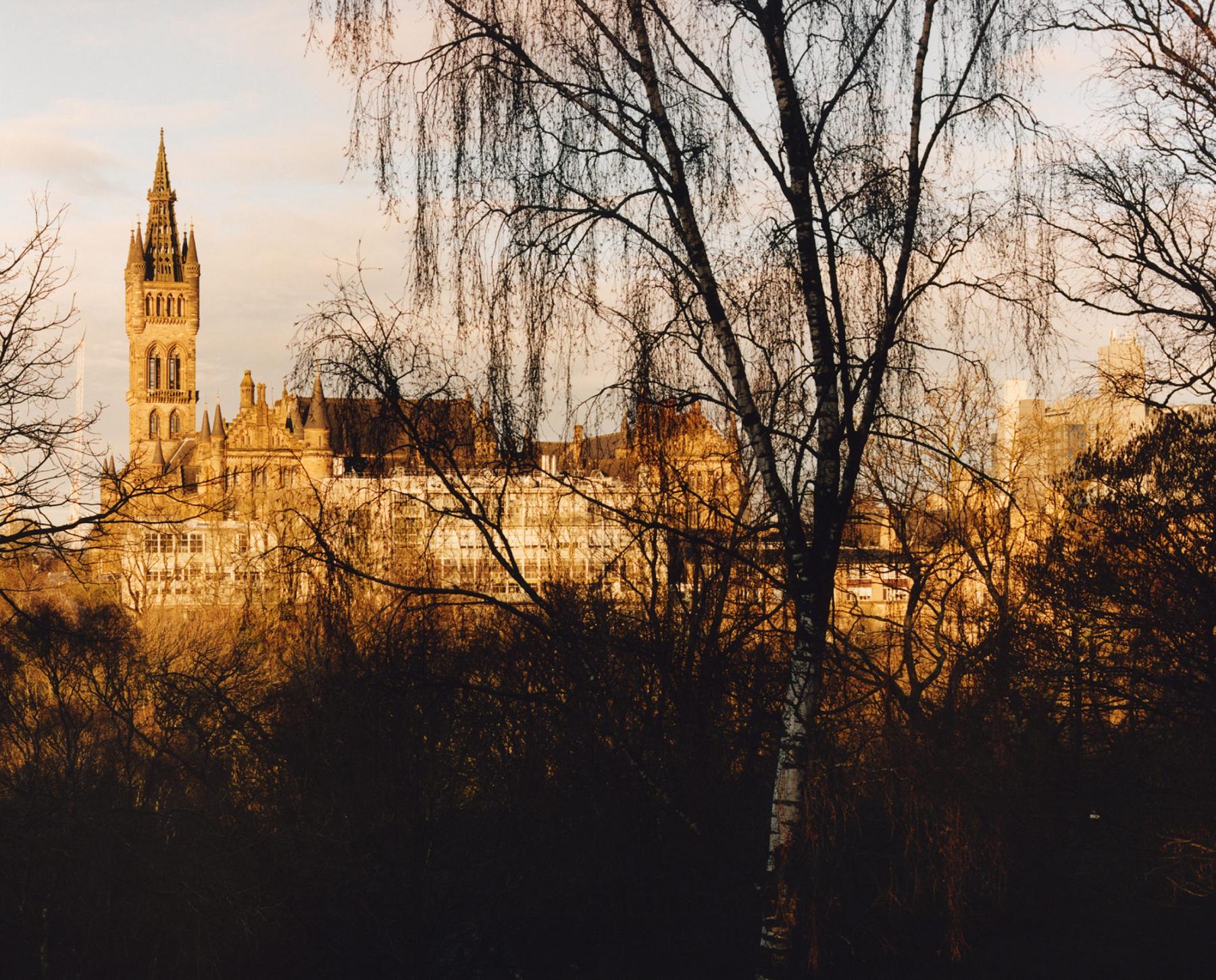
With more than 90 public parks and gardens, Glasgow is one of the greenest cities in Europe.
George, who had been standoffish as a father, became a devoted grandfather, a “big softie” who loved watching musicals with Lynne’s niece Lynne Jr, who appears in both Ratcatcher and Gasman. “He was much better with the grandkids than he was with us,” Lynne says cheerfully. In life, as in her nuanced, character-driven cinema, nothing is simple; we all contain multitudes. Her parents fell back in love in their 50s after decades of cold war. “They loved each other to the day they died,” Lynne says.
Lynne’s mother, Eleanor, who worked as a cleaner, reappears throughout our conversation. She was, Lynne tells me, “such a brilliant woman”, “very sharp”, with a photographic memory. A “swish” dresser and a lover of cinema, she introduced her young daughter to All About Eve, Mildred Pierce, Vertigo – classics with strong women characters. In 2010 Lynne invited Eleanor to the set of We Need to Talk About Kevin in Stamford, Connecticut; her mother posed in the director’s chair and skinny-dipped in the middle of the night with members of the cast and crew. “It was like that scene in The Witches of Eastwick,” Lynne says.
Lynne subsequently took Eleanor to Cannes in 2011 for the premiere of We Need to Talk About Kevin. A photo of her on the red carpet, beaming beside John C Reilly, stayed in Eleanor’s living room until she died of sepsis aged 88 last April, shockingly and suddenly. Though she had had what Lynne calls “a good innings”, the loss was nonetheless devastating.
Lynne originally wanted to be a painter, but she discovered photography at a facility for underprivileged kids in “a shitty part of Maryhill” where young people could make portfolios with a view to attending art school in Glasgow or Dundee. The darkroom was sitting empty; she claimed it, taught herself, and fell in love with the magic of watching images appear in the developer.
When she was at Napier College (now Edinburgh Napier University), she won an Agfa bursary, which meant free paper and film for a year – crucial when you’re “totally broke” – then applied to the Royal College of Art to do photography and made it to the final six. “There was this photographer at the time who did these lascivious nudes, and I didn’t like his work, and I don’t think he liked my work,” she says. He suggested that her close-ups of ravers – faces cut in half, women in club bathrooms staring at themselves in the mirror while under the influence of ecstasy – looked like accidents. “I got a bit annoyed with him in the interview. I was like, ‘Well, they’re not accidents.’” Those photographs, some shot at Pure in Edinburgh, would go on to inspire the rave sequences that close Morvern Callar, in which Samantha Morton dances alone. “We were mimicking each other,” Lynne says of Morton. “I didn’t realise she was studying me. She’s got this ability to not blink for a long, long time, and it does something to your eyes. I didn’t want to call cut because she was so wonderful.” Over the telephone, Morton describes Lynne’s sets as “not too busy; the focus is always on the scene and the story. Actors know the end result will be totally Lynne and that’s what they sign up for.”
Lynne applied to the National Film and Television School in Beaconsfield, Buckinghamshire, to study cinematography, on a whim. “I applied the day before the deadline, like the last 24 hours, you know?” She had just seen Maya Deren’s 1943 silent short, Meshes of the Afternoon – “visually it’s totally stunning, made in a weekend” – and thought: Maybe I’ll try film. Walter Lassally, who had been the cinematographer on the British New Wave drama A Taste of Honey and was by then the head of the school’s camera department, saw she had “a good eye” and admitted her. Lynne’s boyfriend at the time, who had been applying for years and had “film forever” tattooed on his arm, didn’t get in. “That was the end of that relationship,” she says wryly.
“We were so broke. I took all the Toblerones out the minibar.”
Film school liberated Lynne. “I had a great tutor, who showed us things with sound and without sound,” she says. She shot documentaries as a director of photography, learned that documentary wasn’t for her (“You’ve got to go with the moment; you’ve just got to be in it”), and made the short film Small Deaths, which screened at Cannes in 1996 after the producer Gavin Emerson bought it at her graduation show. “I knew he was putting it forward for Cannes, but I didn’t tell anyone, thinking that was never going to happen,” Lynne says. She didn’t really know what Cannes was, and she and her editor and friend, Lucia Zucchetti, stayed in “some shit hotel outside Cannes”, subsisting on free food vouchers cadged from the organisers. “We were so broke. I thought everything was free, you know? I took all the Toblerones out the minibar. They tried to charge me and I was like, Oh my God! I ran away.” The film, a triptych of vignettes depicting key moments of a childhood and adolescence in a Glasgow housing scheme, won the prestigious Jury Prize for short film. (She won again for Gasman in 1997.)
Years later, in 2013, Lynne served on the Palme d’Or jury chaired by Steven Spielberg but nearly missed the photocall because her then 18-year-old nephew, Jack, an aspiring screenwriter working as her assistant, had a habit of prioritising his workouts. “I was late for everything because he was at the gym, you know?” Colleagues on the panel included Nicole Kidman, with whom Lynne found common cause championing Paolo Sorrentino’s The Great Beauty. “Me and her were really advocating,” Lynne says.
That was the beginning of a frustrating period for Lynne. After Kevin, projects fell through, including Lynne’s version of the 2015 western Jane Got a Gun, which she famously abandoned on the first day of shooting after clashing with producers over creative control. Something similar had played out 10 years earlier when she had set about adapting Alice Sebold’s novel The Lovely Bones, only to be replaced by Peter Jackson, whose watercolour vision felt tonally inappropriate for a book about the aftermath of a teenage girl’s rape and murder. (“Even if you don’t make something, you learn from that,” Lynne told IndieWire at the time.) She ended up in Santorini, Greece, dating Sasha, a “gorgeous” long-haired Belarusian chef, and writing the screenplay for You Were Never Really Here in a cafe on the edge of a volcano with intermittent wifi. Her body started to change. “I thought I was having an early menopause. I didn’t even go to the doctor until three months. And then when I did, he was like, ‘What the fuck?’ I really fainted when he did the scan.” Sasha and Georgie – named after Lynne’s father – appear in Brigitte, the 2019 documentary she made about the photographer Brigitte Lacombe and her sister, Marian, for Miu Miu’s Women’s Tales series. The film was a reflection of her own “super complex relationship” with one of her sisters. (Her sister had a brief and regrettable stint as Lynne’s assistant on Morvern Callar. “I’d say ‘Get me a coffee,’” Lynne tells me. “She’d go, ‘Get your own coffee.’ Know what I mean?”)
With pregnancy came an unexpected power. “There’s a beautiful thing where you feel this warrior nature. If people are in your face, you’ll just get them out of it, because you’re two people now. I wish I could be like that all the time.” Jennifer Lawrence’s pregnancy during the filming of Die My Love brought similar energy, Lynne says. “She was glowing. I think that added to the performance, definitely.” It also compressed the time frame. “I didn’t do soft prep. I cast the whole thing in four weeks. It was mad,” Lynne says.
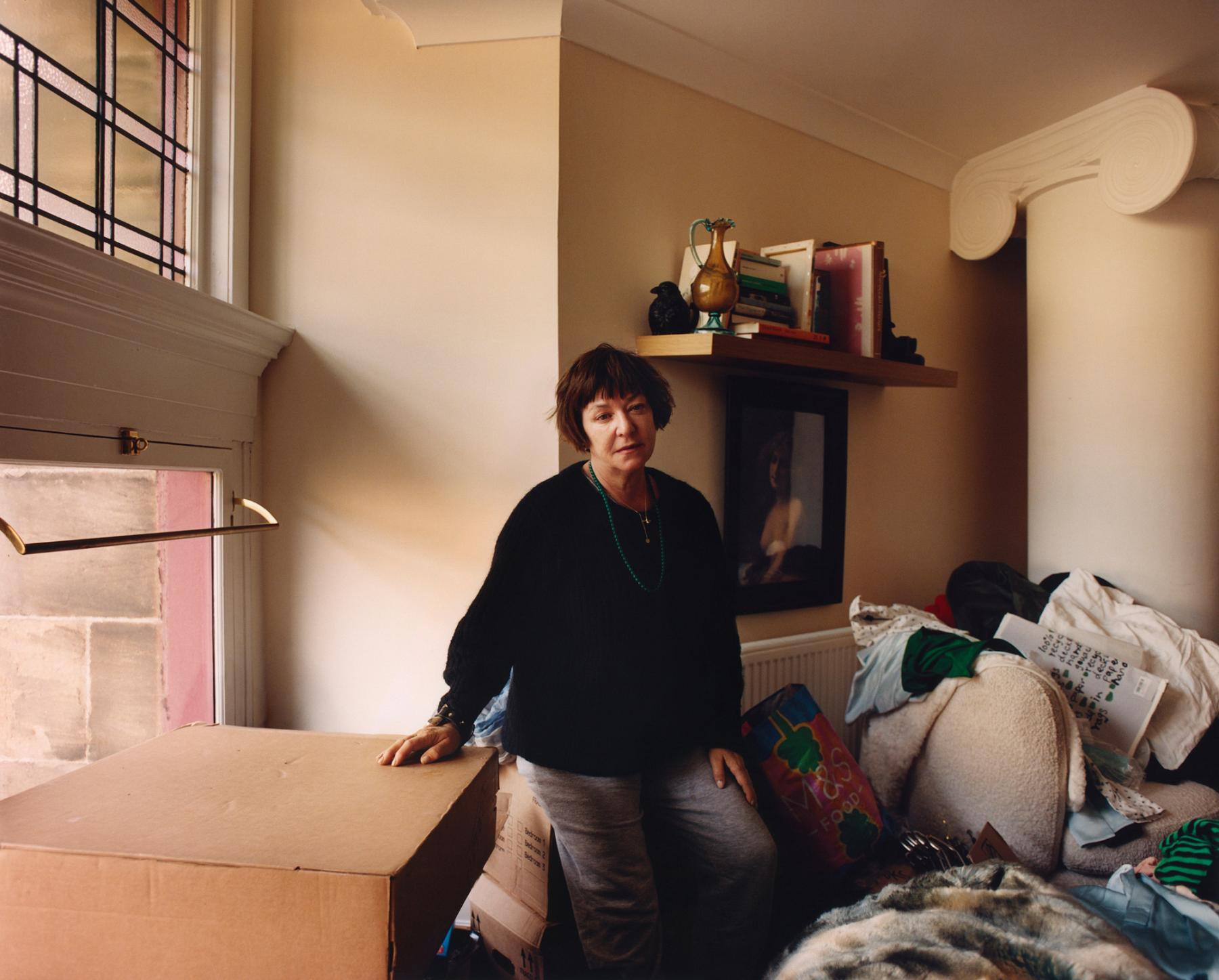
Lynne’s flat on the edge of Kelvingrove Park closely resembles her London one – same aesthetic, different geography.
The Die My Love edit was also severely compressed on account of Lynne’s domestic obligations, she says. “I’d do the school run, get Georgie’s dinner, pick her up at half three. Normally in an edit I would do 12 hours, but I had 10.30 to half three.” Remote cutting is a drag anyway, she says. “It’s shit. There’s always technical problems.” The money was running out too. Then her mother died just before Cannes, where the film had been a late entry into the Official Competition line-up. It received a six-minute standing ovation. “It was kind of crazy. I still want to do a new cut, because when my mum died we only had two weeks left. I know there’s material in it that we didn’t really explore.”
While the film didn’t win, Cannes did deliver a life-altering moment for Lynne’s career. The day after the screening, Mubi acquired Die My Love for $24 million in a fevered bidding war, beating Apple and Neon. It was the first major sale of the festival and the distributor’s biggest ever acquisition. Subsequently, Lynne signed with CAA, the powerhouse talent agency, amid the awards campaign for the film. The timing is significant: after nearly three decades of making uncompromising, personal films largely outside the studio system, Lynne now has the infrastructure of Hollywood’s most formidable agency behind her and the financial cushion of Mubi’s backing. The question is no longer whether Lynne Ramsay can make another film but which one she’ll make first.
She currently has five projects in development: “two treatments, three scripts. That’s because of Covid really; I wrote a lot.” Stone Mattress is an adaptation of the Margaret Atwood short story about wealthy tourists on an Arctic cruise. Julianne Moore is attached to star as a passenger seeking to punish her high school rapist against the backdrop of melting icebergs. “It’s a revenge film, but it’s environmental,” Lynne says. “The character uncovers the past, and the landscape is uncovering the past as well; it’s melting.”
In preparation, she created a 560-page visual deck with her casting director, Lucy Pardee – “the whole film in stills, plus the dialogue, like a graphic novel. It took me three weeks.” Both Netflix and the film production arm of Saint Laurent are interested, she says, but nothing’s locked in. The biggest challenge is “the bloody boat”, since Lynne wants to shoot in Greenland (“quite frankly more so” since Donald Trump’s recent threats) rather than use CGI, and Arctic cruise liners need to be reserved a year in advance.
Polaris, starring Joaquin Phoenix and Rooney Mara, is about a photographer at the turn of the 20th century “who goes to Alaska, taking photographs of the Inuit, and meets the devil in the Arctic,” Lynne says. “It’s an epic production, my 2001.”
But curiously, the director who has given us child drownings, school shootings and hammer-wielding hitmen would like to make “the ultimate escapist film”, as an antidote to our troubled times. “Because that’s what I loved as a child – something that just brought you out of your world. There is value to that, and I never thought I’d say that.”
“My next film, Polaris, sees a photographer go to Alaska. He meets the devil in the Arctic. It’s my epic, my 2001.”
Lynne splits her time between Glasgow and London, where she rents near Queen’s Park. She and Sasha are no longer together, but they make co-parenting work. Lynne has a long history with this part of west London; an ex lived here, Michael the neighbourhood psychoanalyst (who stops by twice during our interview) is around the corner, the designer Bella Freud is a close friend. “Lynne is a great artist; the ideas she holds in her head are fully formed,” Freud tells me over email. “Sometimes she rings me to sing a new song she has composed or invites me over to show me paintings she’s made that morning. Everything she touches blows your mind.” Lynne shops at the Lebanese grocer’s on Harrow Road (“you can get any herb, spice, anything in the world for cheap”) and frequents junk shops in Portobello, where she finds treasures for “no money”. She is teaching herself upholstery, trying to re-cover a Victorian sofa with Liberty fabric. The sofa wouldn’t fit through the door. “My landlord was going to kill me. I got all these film students to come in the middle of the night.” It’s in there now, “but I’ll never get it out again.”
Her flat on the edge of Kelvingrove Park closely resembles her London one – same aesthetic, different geography. “Glasgow’s become a completely different city from when I grew up,” she says, though Scotland’s free education system remains sacred. “It’d be a revolution if they stopped the free education in Scotland. People would be up in arms in the street.”
She swims obsessively; it’s when ideas come. “The repetitive action – you get kind of mesmerised. Sometimes I get these brainwaves when I’m not even thinking.” She shot a paean to immersion in the form of Swimmer, a black-and-white short film commissioned for the 2012 Olympics; its “good budget” facilitated her using a camera crane for the first time. It won her a second Bafta Award. Twice a day she does 20 minutes of transcendental meditation, inspired by David Lynch. “I cried when he died,” Lynne says.
During our conversation, Lynne’s cracked grey-blue iPhone rings intermittently. Her assistant tells her she has missed an appointment with an actor. Another call concerns a forthcoming exhibition of her photography at the Seven Star Gallery in Berlin, comprising assorted images taken over the years: “just a life in pictures,” Lynne says. “Probably more of the mundane and beautiful rather than the famous, though there are a few.” She has been going through storage boxes in Glasgow to find the negatives. When a beautiful young woman enters the cafe – gothy in a trench coat but with apple cheeks and a tumble of curls – Lynne stops her and asks if she’ll sit for her. She will.
The school holidays are around the corner. “I’m going to take my kid to a darkroom,” Lynne says. “There’s one just opened in Finnieston.” She remembers her own discovery of photography as marking the “stunning” departure of her own youth. “I was like, Wow, this is a picture I took and it’s coming up and I’m watching it develop. Just the magic of seeing something appear. I want her to experience that.”
Mark SmithLondon-born, Amsterdam-based Mark has edited titles including Time Out Amsterdam and the Soho House members’ magazine, and he frequently contributes features to The Times and other publications. His investigative podcast series, Stained Glass, is rumoured to be coming soon. Mark’s first contribution…read more Photography by
Jamie HawkesworthFrom Suffolk on the east coast of England, Jamie Hawkesworth is one of the most prolific photographers working today. Initially destined for the forensics lab, his introduction to photography came through a class on crime scene documentation while studying at the University of Central Lancashire. The…read more
Photographic assistance: Cecilia Byrne. Post-production: Simon Thistle
This profile was originally published in The Gentlewoman nº 33, Spring and Summer 2026.